Why Side Projects Teach More Than Formal Education
What Side Projects Teach That Formal Education Cannot
Formal education is designed to give you fundamentals. And that has value. But with everything I have learned over the years, I can say it rarely simulates the real complexity of building something from scratch.
In a side project, there are no prepared answers. If something fails, no one tells you exactly where to look. You have to research, test, fail, and correct.
That process develops a kind of judgment that traditional education struggles to teach.
“Tell me and I forget, teach me and I may remember, involve me and I learn.”
— Benjamin Franklin, statesman, inventor, and writer
Why Building Changes the Learning Process
When a project depends entirely on you, your relationship with learning changes. You no longer study to remember information. You study because you need to solve something specific.
That makes you pay more attention, retain information better, and connect concepts more quickly.
The pressure of applying real knowledge transforms theory into experience.
What I Learned Outside the Classroom
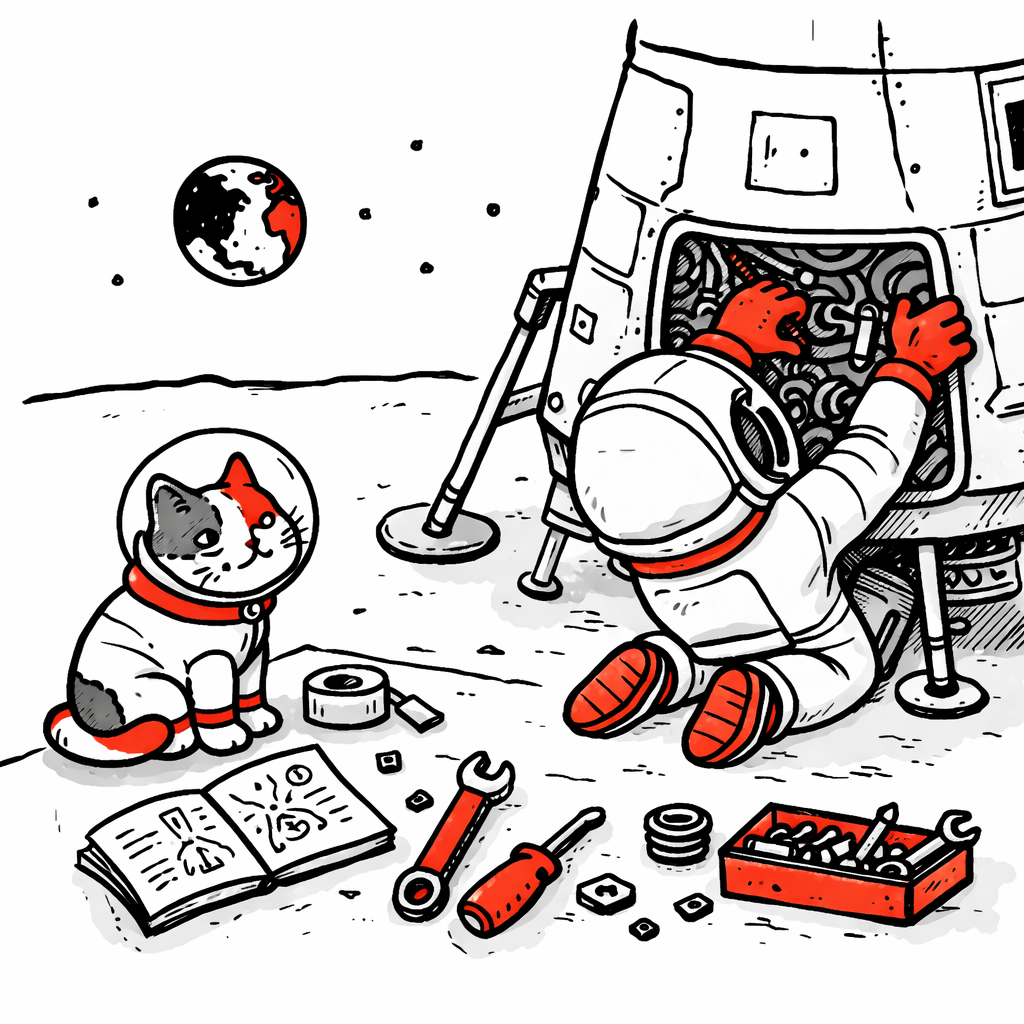
Much of what has helped me most professionally was learned while trying to build things on my own. Besides, a large part of my formal education has already become obsolete. So many times, I learned programming languages without fully knowing what I was doing.
I remember one project in particular, building my first app. It started as a simple experiment to see whether I could create a basic budget tracker, and it ended up teaching me more than several courses combined.
Not because it was perfect, but because it forced me to face real problems.
How to Use Side Projects to Learn Better
The first step is to build something that genuinely interests you. Curiosity sustains effort much better than obligation.
The second step is to choose projects slightly above your current level. Enough to challenge you, but not so much that they discourage you.
The third step is to finish what you start. Even if it does not end up perfect. Which, honestly, it probably won’t. Finishing teaches as much as building.
Education Informs You, Building Transforms You
I won’t deny it. Education gives us knowledge. But applying that knowledge to something real changes how you think.
When you have to make decisions, solve errors, and adapt constantly, you are no longer memorizing. You are developing judgment.
And that is the difference between knowing something and knowing how to use it.
“Education is not the learning of facts, but the training of the mind to think.”
— Albert Einstein, theoretical physicist
Learning by Doing Always Leaves a Deeper Mark
The lessons you learn while building something of your own tend to stay with you longer.
Because you do not just remember the concept. You remember the problem, the mistake, the frustration, and how you solved it.
In the end, education matters. But many times, it is side projects that truly teach you how to make things work.