Unlearning Hurts More Than Learning
Unlearning, well… what can I say. For a long time, I thought learning meant adding new things. More information, more ideas, more techniques. But over time, I realized that what was holding me back the most wasn’t what I didn’t know, but everything I thought I knew and no longer served me. Coming from a systems background, I saw how a lot of information became useless in just a few months.
The illiterate of the 21st century will not be those who cannot read and write, but those who cannot learn, unlearn, and relearn.
— Alvin Toffler
That’s when I understood something uncomfortable. Unlearning wasn’t optional. It was inevitable.
The problem is that no one prepares you for this. We’re taught to accumulate, to memorize, to repeat. Rarely are we told that in order to move forward, we first need to let go. And letting go is uncomfortable, because it means accepting that something you used for years no longer works. In my case, that meant programming languages.
That’s where real learning friction begins. Not when you don’t understand something new, but when you’re forced to question what’s old. That’s where the strongest resistance shows up.
Why Unlearning Is So Uncomfortable
Unlearning doesn’t mean deleting information. It means questioning beliefs, mental habits, and ways of seeing the world that once helped us, but now limit us. And that hits the ego. Because admitting that something no longer works often feels like admitting you were wrong.
On top of that, what’s familiar feels safe. Even if it no longer works well, it’s predictable. Unlearning leaves you in uncertain territory, somewhere between who you were and who you don’t fully understand yet. That discomfort makes many people choose to stay where they are. Even worse when that person is your boss.
But real learning doesn’t happen in comfort. It happens when you’re willing to examine your own assumptions. When you stop defending ideas just because they’re yours. That’s where something different begins.
When What You Knew Started Getting in Your Way
I noticed it when I realized how many decisions I was making on autopilot, following rules I had learned without ever questioning them. Ideas about success, work, relationships, even about how I “should” learn. All of that belonged to another stage of my life, not the one I was living now.
Instead of helping me, those ideas were blocking me. They kept me stuck on paths that no longer made sense. But because they were familiar, letting them go felt hard. Repeating was easier than reviewing.
That was the breaking point. Understanding that continuing to learn without unlearning first was only leading me to more confusion. I didn’t need more answers. I needed better questions.
The First Step Toward Unlearning
The first step wasn’t changing. It was observing. Noticing which ideas I defended without knowing why. Which beliefs I repeated simply because they had always been there. That simple exercise created mental space.
Then came something harder. Allowing myself to doubt. Not everything, but enough to stop taking things for granted. Doubt, not as weakness, but as a tool for thinking better.
Unlearning isn’t a violent act. It’s not about breaking everything. It’s a gradual process of revision. And it begins the moment you allow yourself not to be right.
Learning Without Unlearning Is Carrying Extra Weight
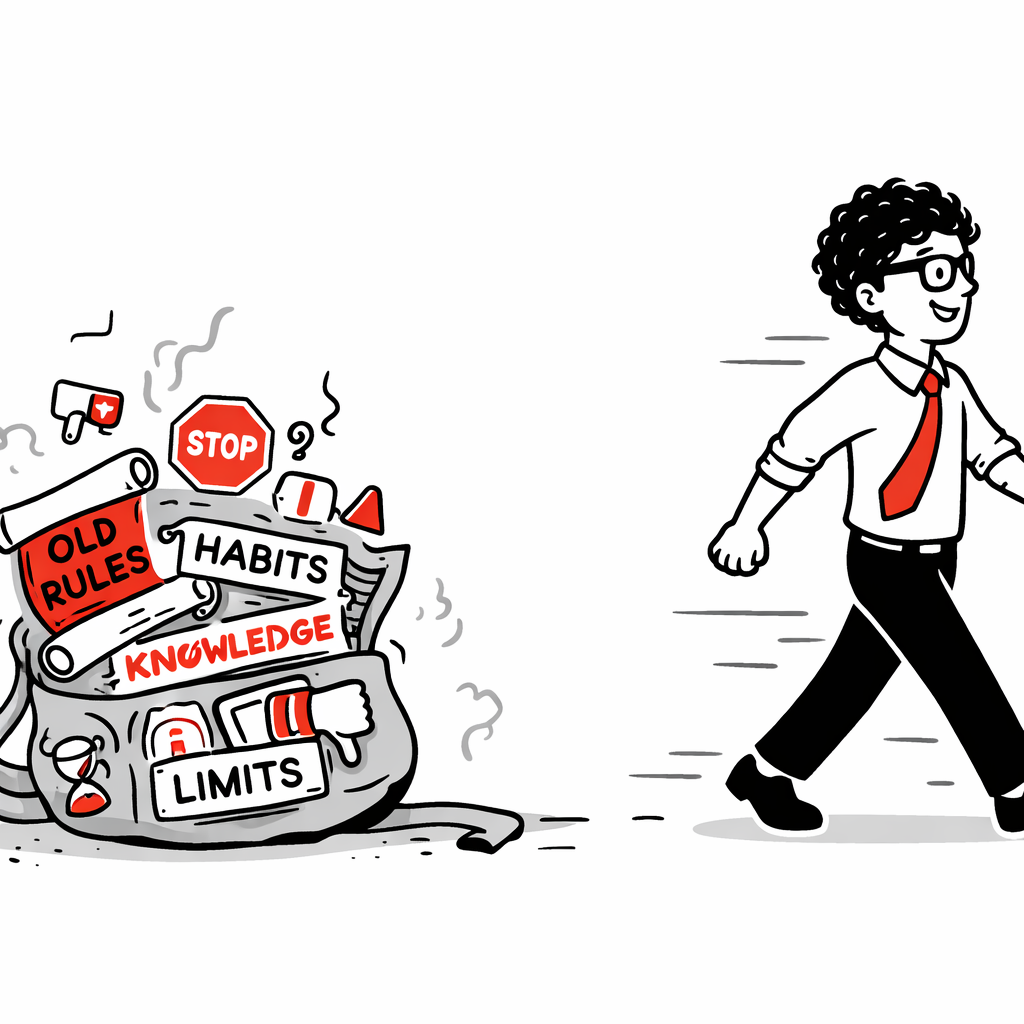
If I had to sum it up in one idea, it would be this: not everything you learned deserves to stay with you forever. Some things did their job and that’s it. Insisting on carrying them only makes the path heavier.
Unlearning doesn’t take value away from you. It makes you flexible. It allows you to adapt, think more clearly, and respond more consciously to change.
When you let go of what no longer serves you, learning becomes lighter. More honest. More useful.
It is what we know already that often prevents us from learning.
— Claude Bernard
Is Also a Form of Maturity
At work, something became unsustainable. People simply refused to unlearn. And to be honest, unlearning is an act of personal responsibility. It means accepting that growth requires review, adjustment, and sometimes letting go. Not everything that shaped you defines you forever.
Life changes. You change. And learning how to live well means moving with that change, not resisting it. Not from rigidity, but from openness.
Learning new things matters. But learning to release what no longer serves you may be what truly allows you to move forward.