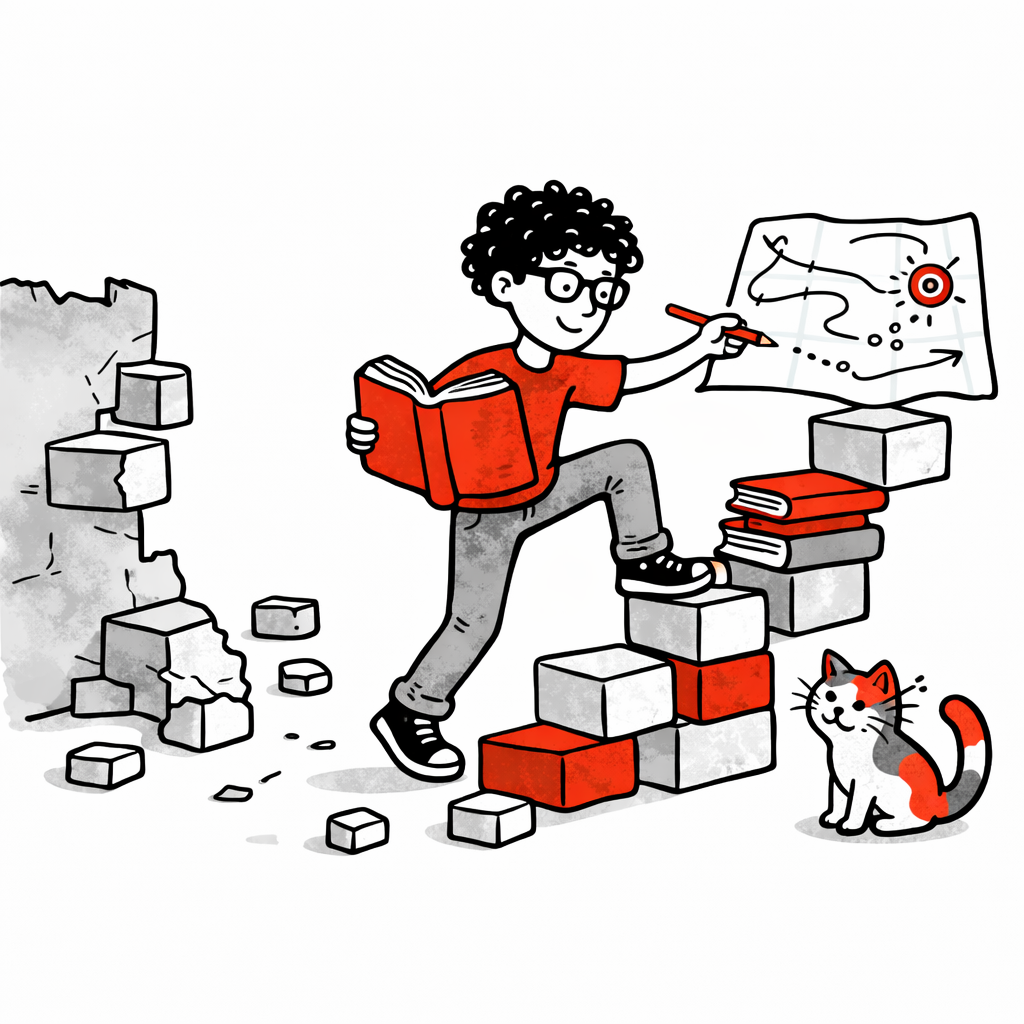
Learning Outside the Official Script
Why is teaching yourself necessary? At some point, you realize that the educational system is not designed for you to think independently, but to fit in. You complete assignments, memorize information, pass exams. That’s it. Rarely are you taught how to learn on your own, or how to pursue what truly interests you or what you personally consider necessary.
The function of education is to teach one to think intensively and to think critically.
— Martin Luther King Jr.
Once you begin to notice the cracks, you cannot unsee them. Outdated content, sometimes so outdated that certain subjects still use the same material I learned years ago. I understand that some things do not change, like history. But at least the way we tell it could evolve.
Exhausted teachers, rigid structures. It is not always the fault of individuals. Sometimes it is simply a system that stopped evolving. That is where the need to teach yourself begins. Not out of rebellion, but out of intellectual survival.
The System Isn’t Teaching Everyone, but It Works for Some
Saying the system is broken does not mean it fails everyone. It works for those who adapt well to its rules, although they are not the majority. Still, it leaves behind those who learn differently, those who question too much, or those who need a different pace or method.
The issue is not only what is taught, but how it is taught. Learning turns into repetition instead of understanding. And when that happens, curiosity begins to fade. I feel that much of formal education centers around repetition, but repetition without clear comprehension or practical application simply does not make sense.
In that context, teaching yourself is not a luxury. It is a way to regain control over your learning process.
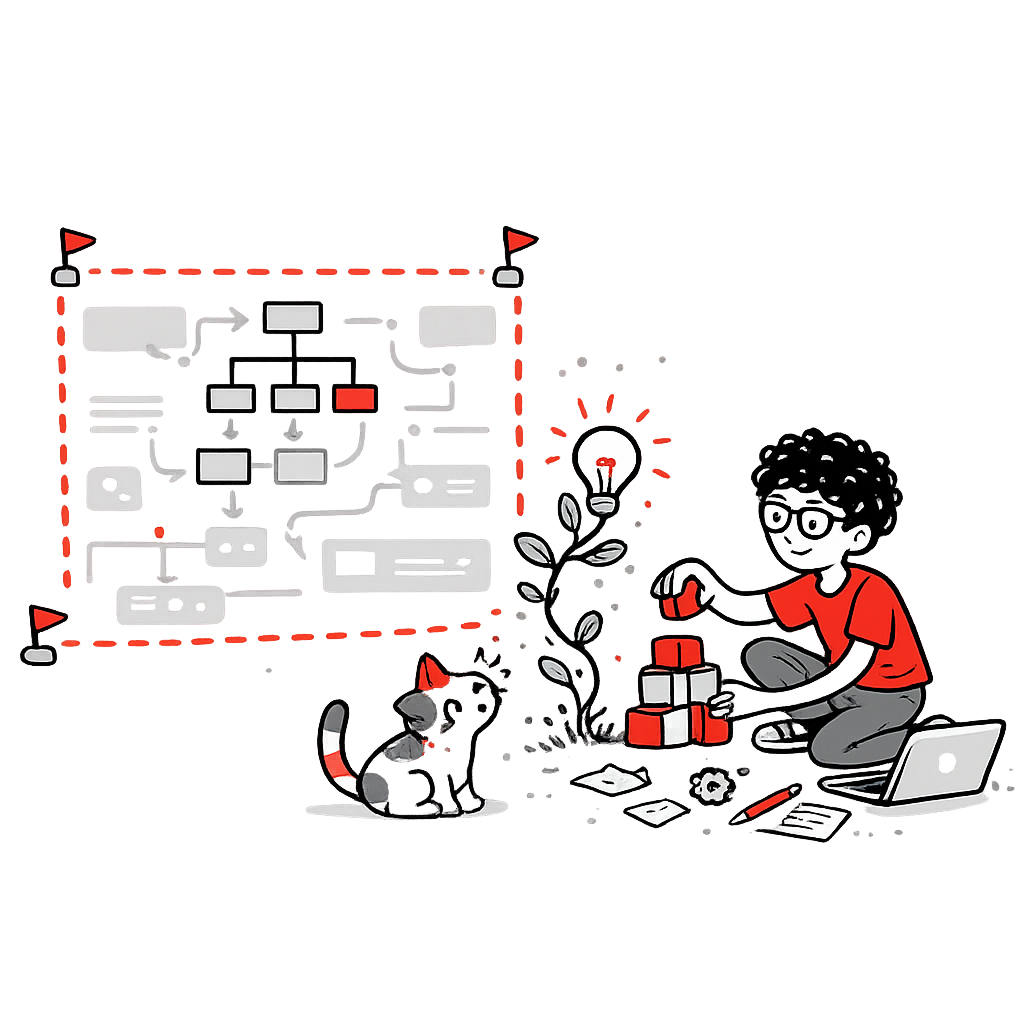
When I Realized I Had to Stop Waiting for Permission
I was in university between 1998 and 2004 when all of this became clear. Honestly, out of around twenty professors, maybe two or three truly made a difference. I stopped waiting for someone to teach me exactly what I needed. What genuinely interested me was not always part of the official program. if I wanted to learn it, I had to look for it outside the classroom.
At first it felt strange, almost inappropriate, like stepping outside the plan was somehow wrong. But over time you understand that no one is going to design a perfect path tailored specifically for you.
That was the day I stopped depending exclusively on what was given to me. I began building my own map.
Building Your Own Learning System
Teaching yourself does not mean rejecting formal education entirely. That would be an oversimplification, and I do not consider myself morally superior enough to tell anyone to do that. Instead, it means complementing it. Choosing what to keep and what to expand. Designing your own schedules, exploring alternative sources, creating personal projects.
The most important difference is this: now you decide what to learn and why. You no longer study just to pass. You study to understand. You do not simply consume information, you process it. And even better, you can generate it.
However, building your own system requires discipline. Its ultimate goal is something the traditional system rarely provides: autonomy.
Teaching Yourself Is an Inconfortable Responsibility
When you decide to teach yourself, you can no longer blame the system for everything. If you do not move forward, the responsibility is also yours. And that can feel uncomfortable. There will be moments when you feel stuck, but only you can define your pace.
Do not misunderstand me. That discomfort is healthy. It forces you to evaluate your effort, your focus, your consistency. It turns you into an active participant in your own education.
To be honest, it is not easy. But it is real.
Education is what remains after one has forgotten what one has learned in school.
— Albert Einstein
Knowledge Is Also Built from the Edges
The most interesting ideas do not always emerge from the center of the system. Sometimes they grow on the margins, where someone chose to question, explore, and learn independently.
Teaching yourself within an imperfect system is not a defeat. It is an intelligent adaptation.
You may not be able to change the entire system immediately. But you can change how you interact with it. And from there, begin building something different.