Your Mind Is Not as Private as You Think
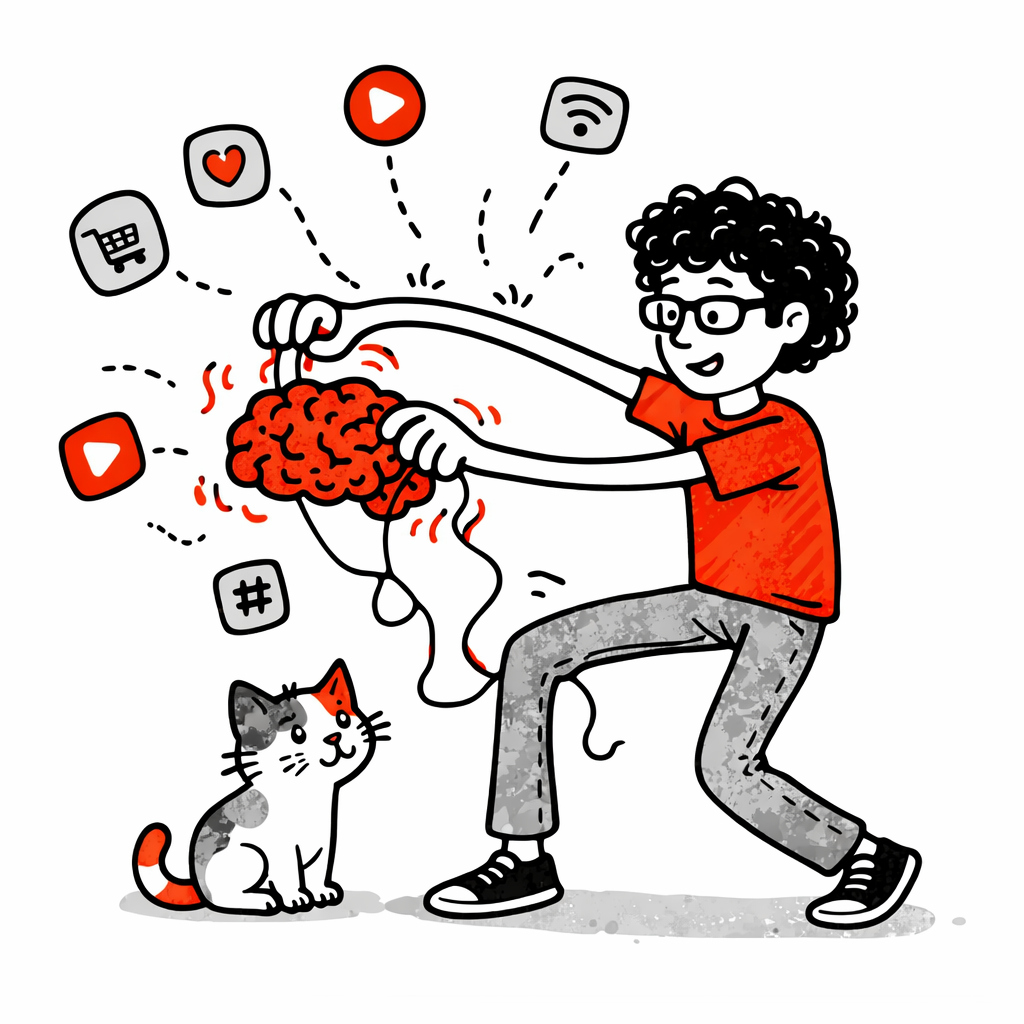
For years, I only saw algorithms as technical tools, something related to system development and completely separate from how I think I believed that what interested me, what made me angry, or what I defended was purely the result of my own judgment. However, over the past decade or so, I began to notice patterns. The topics appearing on my screen kept repeating. The ideas I cosumed aligned too perfectly with what I already believed. Or worse, maybe my thinking was slowly aligning with everything I was consuming.
It wasn’t a coincidence.
When you are not paying for the product, you are the product.
Andrew Lewis
Algorithms have envolved far beyond simple content sorting. Today they prioritize, filter, and decide what we see and decide what we see and what we don’t. What appears in front of us and what never does. And when something is repeated often enough, it starts to feel true. Without realizing it, your digital environment becomes a mirror designed to reinforce what you already believe.
As someone from a systems background, I don’t think the problem is that algorithms exist. The problem is that they operate quietly. When something influences your thinking without your noticing, it stops being information and starts becoming programming. And that is not harmless.
The Real Risk Is Not Technology, It’s Repetition
The human brain works through exposure. The more you see an idea, the more familiar it becomes. And the more familiar it becomes, the more credible it feels. It’s that simple.
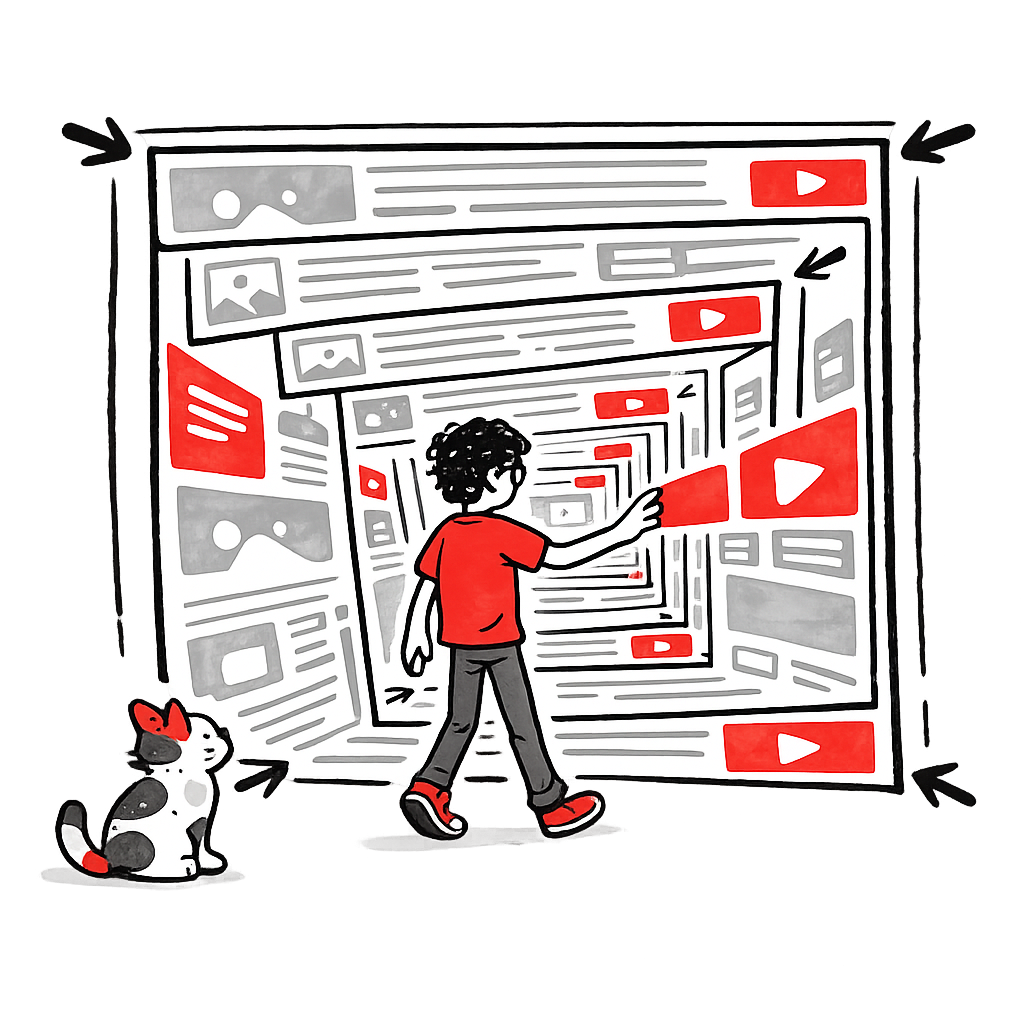
Algorithms exploit this principle perfectly. They don’t force you to think something. They simply show it to You again and again until integrates into how you think. Over time, your field of vision narrows. You believe you’re exploring freely, but in reality, you’re navigating within a limited space designed to confirm your existing preferences.
This isn’t a conspiracy theory. It’s attention optimization, often backed by financial incentives.
If you are not aware of this, you may end up believing your thinking is independent, when in reality it is being shaped by invisible patterns.
How to Prevent Algorithms from Shaping Your Mind
Now, everything explained above might sound neutral or even harmless. Personally, I don’t think is. That’s why I believe we should push back, even in small ways, against algorithms that are evolving rapidly.
The first hack is simple: interrupt repetition. Deliberately look for content that challenges what you already consume. Not to immediately change your opinion, but to expand your mental map. If everything you read confirms what you already believe, you are not thinking, you are reinforcing.
This reminds me of the movie World War Z, where they mention the “Tenth Man Rule.” If nine people in a group agree on something, the tenth has a moral obligation to disagree and assume the others might be wrong. That kind of intellectual resistance matters.
The second hack is to diversify your sources. Don’t depend on a single platform to inform yourself, and certainly not only on television. Changing your environment changes your stimulus. Changing your stimuls reduces automatic manipulation of your attention.
The third hack is reclaiming control of your time. Algorithms depend on your presence to learn from you. Limiting your exposure is not moral discipline, it’s cognitive strategy. Less automatic consumption means more space for independent thinking, especially if you’ve even fallen into endless scrolling on platforms like TikTok.
Thinking Requires Frinction
If everything feels comfortable and familiar, your mind does not expand. Friction is necessary for better thinking. The discomfort of reading something different, questioning a dominant narrative, or stepping outside the automatic feed. Over time, this mental friction even protects you from cognitive stagnation.
Unfortunately, algorithms remove friction to keep you engaged. But in doing so, they also reduce cognitive diversity. And without diversity, thinking becomes predictable.
Real thinking requires consciously choosing what enters your mind.
We shape our tools and thereafter our tools shape us.
Marshall McLuhan
Your Attention Is Your Mental Territory
Algorithms are not the enemy. They are tools designed to optimize the interests of the companies behind the platforms. Of course, that optimization comes at a cost, and often that cost is your attention.
Your attention is the most valuable resource you have. It is the filter through which your thoughts are formed. Protecting it si a modern form of intellectual self-care.
The real question is not whether algorithms influence you. The real question is how much control you are willing to take back.